Angus Local Nature Conservation Sites
Consultation has concluded
Have your say on designating locally important areas for nature 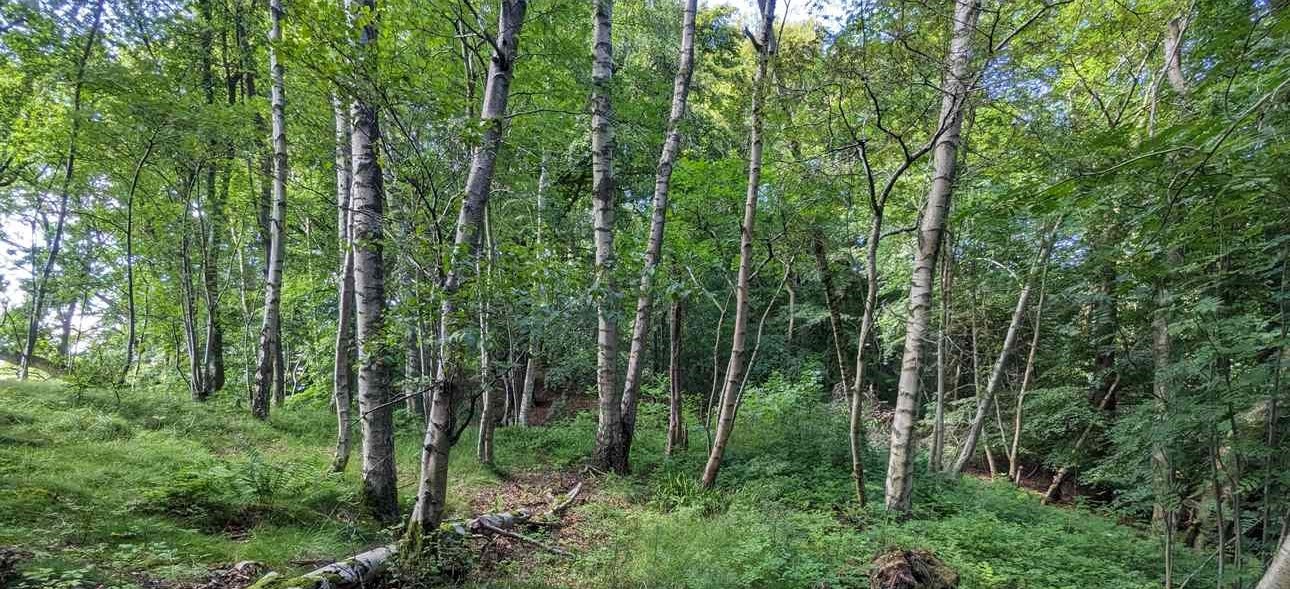
We want to hear from you on the designation of Local Nature Conservation Sites (LNCS) in Angus.
Your opinion can help inform approval for the designation of sites that are important for nature.
Complete our survey to share your thoughts.
What are Local Nature Conservation Sites?
Local Nature Conservation Sites (LNCS) are areas of land that are considered locally important for nature. LNCS are in the form of Local Biodiversity Sites or Local Geodiversity Sites.
This consultation refers to LNCS that are recognised for biodiversity interest, specifically the species and habitats present in an identified area.
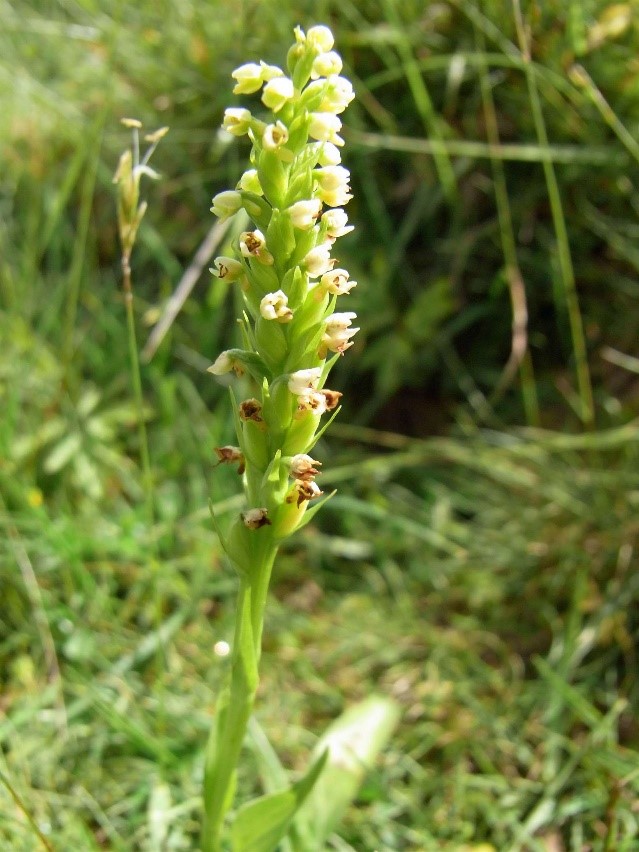 Small white orchid - a locally rare plant (c) T. LoizouWhy are Angus Council designating LNCS?
We are facing a nature and climate crisis. Under the Nature Conservation (Scotland) Act 2004. All public bodies in Scotland, including the Council, have a duty to further the conservation of biodiversity. Designation of LNCS is one of the ways the Council meets this obligation.
LNCS are designated by Local Authorities with the purpose to safeguard biodiversity and geodiversity of local importance through Local Development Plans as outlined in National Planning Framework 4 (Policy 4: Natural Places).
How do LNCS help nature?
LNCS recognise areas of local importance for nature in Angus. The sites identified can make a significant contribution to conserving habitats and species that are locally rare and are protected through planning policy.
What does the LNCS designation mean for landowners?
The designation of land as LNCS does not affect daily land management. The LNCS designation reflects the high-quality natural habitat present, which is a result of the sympathetic way land has been managed for generations.
National Planning Framework 4 provides protection against inappropriate development which would affect the sites, therefore, landowners should be aware of these requirements within Policy 4(d) of the Framework.
The designation of areas as LNCS will be a consideration when applications for forestry grant or agri-environment schemes are being assessed. Designation may help landowners obtain grant funding, but can limit options for funding where nature conservation interest would be reduced.
How are LNCS assessed?
The process to identify and assess sites is informed by local experts, following guidance set out by NatureScot.
The panel of local experts includes representatives from Nature Scot, Botanical Society of Britain and Ireland, county species recorders, local nature interest groups, and Angus Council.
Where are Angus LNCS?
The Council approved the designation of 28 LNCS in November 2023. As the guidance set out by Nature Scot has been updated since this time, the Council are now reviewing these sites and additional areas that have been identified.
The map below shows the location of all 29 Angus LNCS. Click on the site names below for more information.
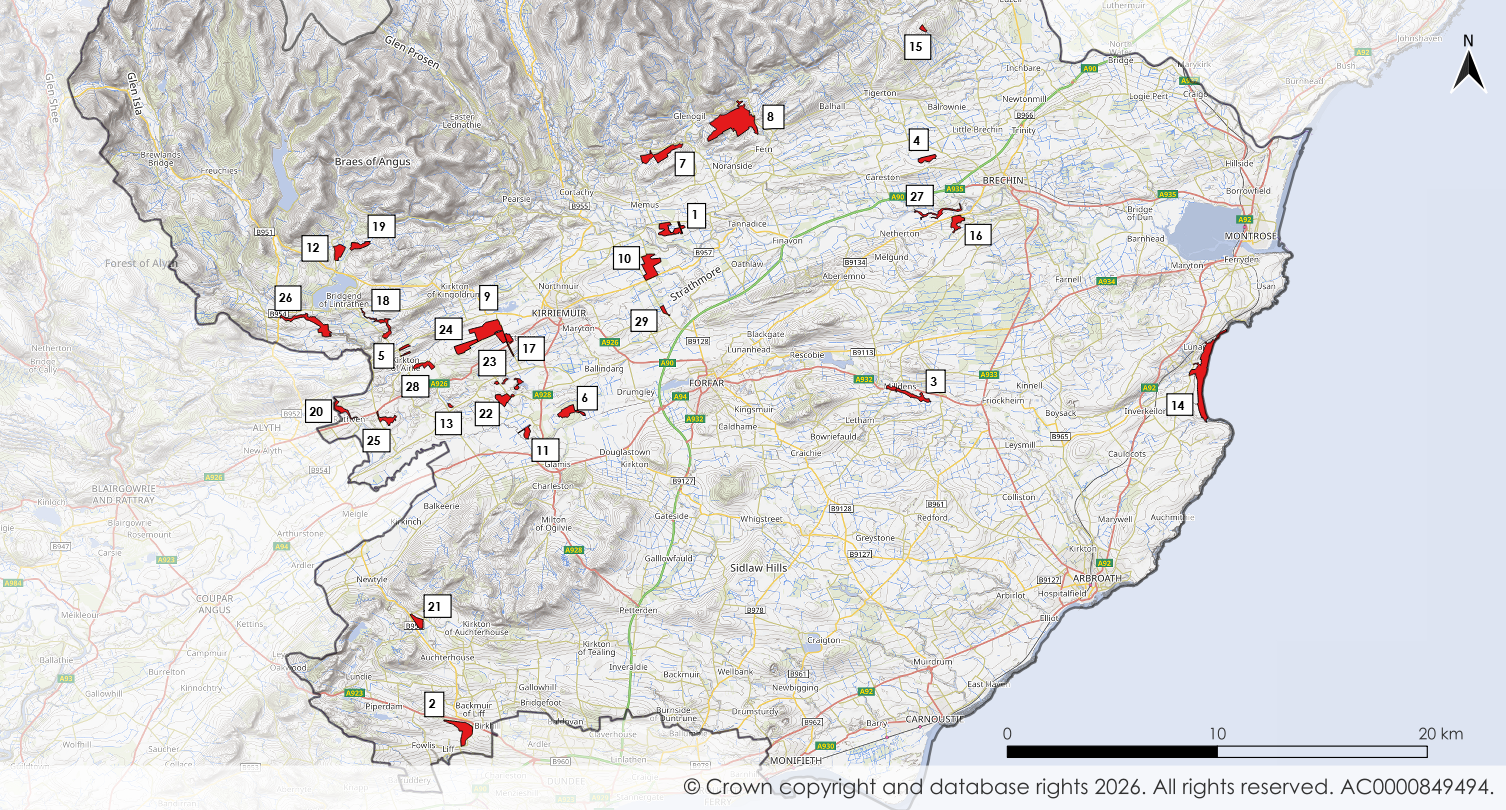
3. Balmadies Wood and Lady’s Dowry 6. Captain’s Pond and Berrymoss Wood | 26. Reekie Linn to Slug of Auchrannie 27. River South Esk Kintrockat 29. Woodside |
The survey closes on Friday 12 June 2026.
The results of this survey will be included in a report to committee later in the year.
-
 Angus LNCS location map (372 KB) (pdf)
-
 Local Nature Conservation Site Summaries
-
1. Auchleuchrie (393 KB) (pdf)
-
2. Backmuir Wood (380 KB) (pdf)
-
3. Balmadies Wood and Ladys Dowry (286 KB) (pdf)
-
4. Barrelwell Bog (304 KB) (pdf)
-
5. Braes of Airlie (311 KB) (pdf)
-
6. Captains Pond Berrymoss Wood (385 KB) (pdf)
-
7. Den of Ogil Reservoir (312 KB) (pdf)
-
8. Deuchar Hill (305 KB) (pdf)
-
9. Egno Moss (299 KB) (pdf)
-
10. Eskhill (295 KB) (pdf)
-
11. Glamis Sand Pit (295 KB) (pdf)
-
12. Inzion (300 KB) (pdf)
-
13. Leys of Lindertis (311 KB) (pdf)
-
14. Lunan Bay (269 KB) (pdf)
-
15. Lundie Bog (282 KB) (pdf)
-
16. Mains of Aldbar (277 KB) (pdf)
-
17. Market of Muir (356 KB) (pdf)
-
18. Melgam Water (383 KB) (pdf)
-
19. Newton Moss (297 KB) (pdf)
-
20. Oak Wood (336 KB) (pdf)
-
21. Pitnappie Moss (341 KB) (pdf)
-
22. Powmyre Grassland (283 KB) (pdf)
-
23. Powmyre Wetland (286 KB) (pdf)
-
24. Red Loch (319 KB) (pdf)
-
25. Redmire Wood (316 KB) (pdf)
-
26. Reekie Linn to Slug of Auchrannie (300 KB) (pdf)
-
27. River South Esk Kintrockat (366 KB) (pdf)
-
28. The Thorn (272 KB) (pdf)
-
29. Woodside (278 KB) (pdf)
-

