Reinforced Autoclaved Aerated Concrete (RAAC) in Angus
Sign up to follow this project to receive regular RAAC project updates by email.
RAAC is a reinforced form of lightweight concrete mainly used in flat roofs but also in some floor and wall panel construction in the UK from the mid-1950s to the mid-1990s.
For further information surrounding the use of RAAC, the Royal Institute of Chartered Surveyors and the Institute of Structural Engineers have published helpful guides and FAQs that may address your concerns and questions.
Schools
Following a survey carried out in 2021, no Angus Council school buildings were identified as containing Reinforced Autoclaved Aerated Concrete (RAAC).
Non-educational buildings
During inspections of our non-educational buildings in 2023 we identified that RAAC was used in the construction of the roof of Rosehill Resource Centre. A structural engineer conducted a full inspection of the roof and found the RAAC roof panels to be in good condition, with no cause for concern. The Centre remains open and operational as normal. Annual inspections are in place and remedial works will take place as required.
Housing
Inspections identified that RAAC was used in the construction of a very small number of council and former council properties in Angus.
Angus Council continues to engage with residents of all council owned and former council owned properties, where we are confident RAAC was used in the construction of the properties.
We would like to thank all households who have engaged with us so far. Your feedback has been essential in helping us coordinate our approach to RAAC remediation and continues to shape the support we provide.
Private tenants
If you are a private tenant and you suspect or have been made aware that RAAC could have been used in the construction of your property, you should speak with your landlord in the first instance to discuss your concerns.
Private owners and landlords
If you are a homeowner or landlord and you suspect or have been made aware that RAAC could have been used in the construction of your property, we strongly recommend that, if you have not done so already, you have your property inspected by a suitable qualified Chartered Structural Engineer, in accordance with the guidance issued by the Institution of Structural Engineers, to determine if RAAC panels are present in the roof. The chartered Structural Engineer will be able to assess the condition of the concrete planks, whether RAAC is present, and advise you on any necessary mitigation works. We also recommend that you speak with your home insurance company for further advice.
If you are advised by a structural engineer that works should be undertaken immediately, as a private owner, it is your responsibility to ensure the works are undertaken.
If your property sits within a terrace that adjoins an Angus Council property, and a Structural Engineer has recommended alterations to your RAAC panels and roof finishes, Angus Council Housing ask that they are consulted, as the nature of these works could impact upon our adjoining roofs.
If your property adjoins and sits within a privately owned property terrace (that are all privately owned), Angus Council suggest that owners consult with all neighbours within the terrace prior to proceeding with any recommended works.
It is important to remember that any recommended works may require owners to seek Angus Council Planning and Building Standards approval before any works are undertaken.
Reputable building surveyors and structural engineers in your local area can be found here:
The Institution of Structural Engineers
Additional advice and support
If you need additional support and advice relating to your health and wellbeing or finances, there are a number of resources available to you:
Mental Health, wellbeing, suicide prevention and crisis support
Financial Support
Angus Council remain committed to providing private owners the opportunity to have works carried out as part of our contract if they wish to participate. As part of this, we will do further work to develop financial and non-financial support options. This will involve further engagement with private owners prior to bringing a report back to Committee to approve any package of support.
Angus Council are also part of several national RAAC groups and continue to engage with Governments around funding opportunities for both council and private properties.
Buy-Back and Opportunities for RAAC Properties
Angus Council’s buy-back policy is focused on increasing our council housing stock to meet the current housing emergency. There is no policy for buying properties and leasing them back to current owners. Any property containing RAAC would not meet the criteria for the buy-back policy as without RAAC removal, the property would be void.
Compulsory Purchase Orders (CPO) for RAAC Properties
In Scotland, a CPO is a mechanism that allows a public body to acquire land or property without the owner's agreement where there is a compelling public interest case. Angus Council are not considering CPOs in this instance as we have no plans to demolish houses at Milton Street, Monifieth.
Asbestos Information
We know from previous testing within properties in Milton Street that a material containing between 1 and 4% of asbestos is present as a thin textured coating applied to the RAAC panels.
Please be reassured that if undisturbed, this type of textured coating carries a very low risk. We have also tested the roof felt in the pilot project property, and no asbestos was found here.
An air test has also been recently conducted at a council owned property where a tenant had raised concerns following disturbance to the textured coating, this result came back as all-clear for asbestos.
Given the very low asbestos content and the widespread use of similar materials in buildings throughout the UK, we would like to reassure residents that the asbestos is contained and presents minimal risk when left undisturbed.
You can find more information about how the council deals with asbestos here: Asbestos in council houses.
If you are a council tenant and, you notice any leaks, changes to your ceiling, or have any other concerns about your property, please go to www.angus.gov.uk/RAAC or contact us on ACCESSline on 03452 777 778 or email directly to coastalmanagers@angus.gov.uk
Private owners should conduct their own asbestos survey if they have any concerns with their property.
-
RAAC Pilot Project – now complete
Share RAAC Pilot Project – now complete on Facebook Share RAAC Pilot Project – now complete on X (formerly Twitter) Share RAAC Pilot Project – now complete on Linkedin Email RAAC Pilot Project – now complete link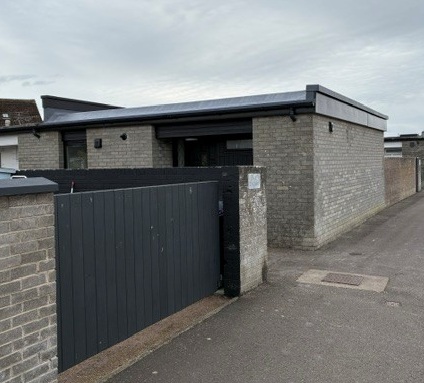
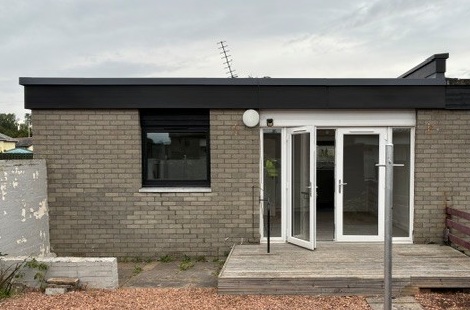
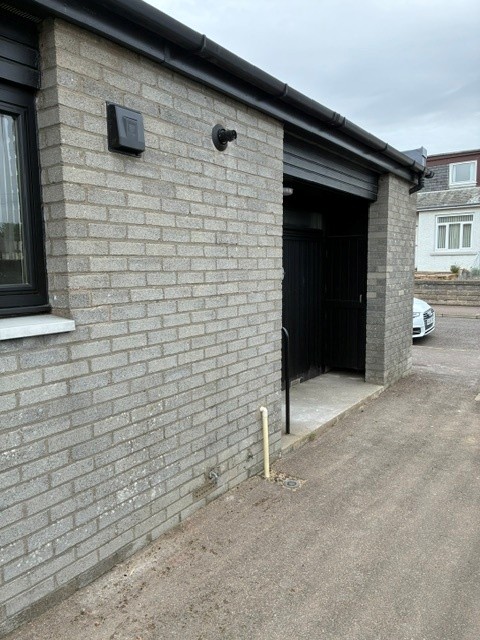
We have now completed the RAAC Pilot Project, this involved the removal of RAAC panels and the installation of a new timber-structured flat roof.
The purpose of this project was to establish whether a successful connection could be achieved between the new roof structure and the existing roof finishes to allow Angus Council to continue with roof replacements on additional council-owned properties.
The new roof structure will continue to be monitored over the winter period to determine the pilot project’s success following exposure to Scotland’s winter weather.
Angus Council will now begin compiling an Information Report to present to the Housing Committee in November to outline the outcome of the project and proposed next steps. These next steps will include looking at procurement options to establish costings for a larger programme of RAAC remediation works. Further engagement will then follow with Governments to formalise a detailed ask for financial support and options for all Angus residents affected by RAAC.
Following the Housing Committee in November, a pack of information will be shared publicly, providing Angus residents with the opportunity to access our learnings and subsequent approach to replace the RAAC panels with a new timber-structured roof. Information will include technical and architectural drawings where available.
Angus Council remain committed to supporting all Angus residents affected by RAAC and will continue to engage residents when new information is available.
-
Project Update: Progress continues
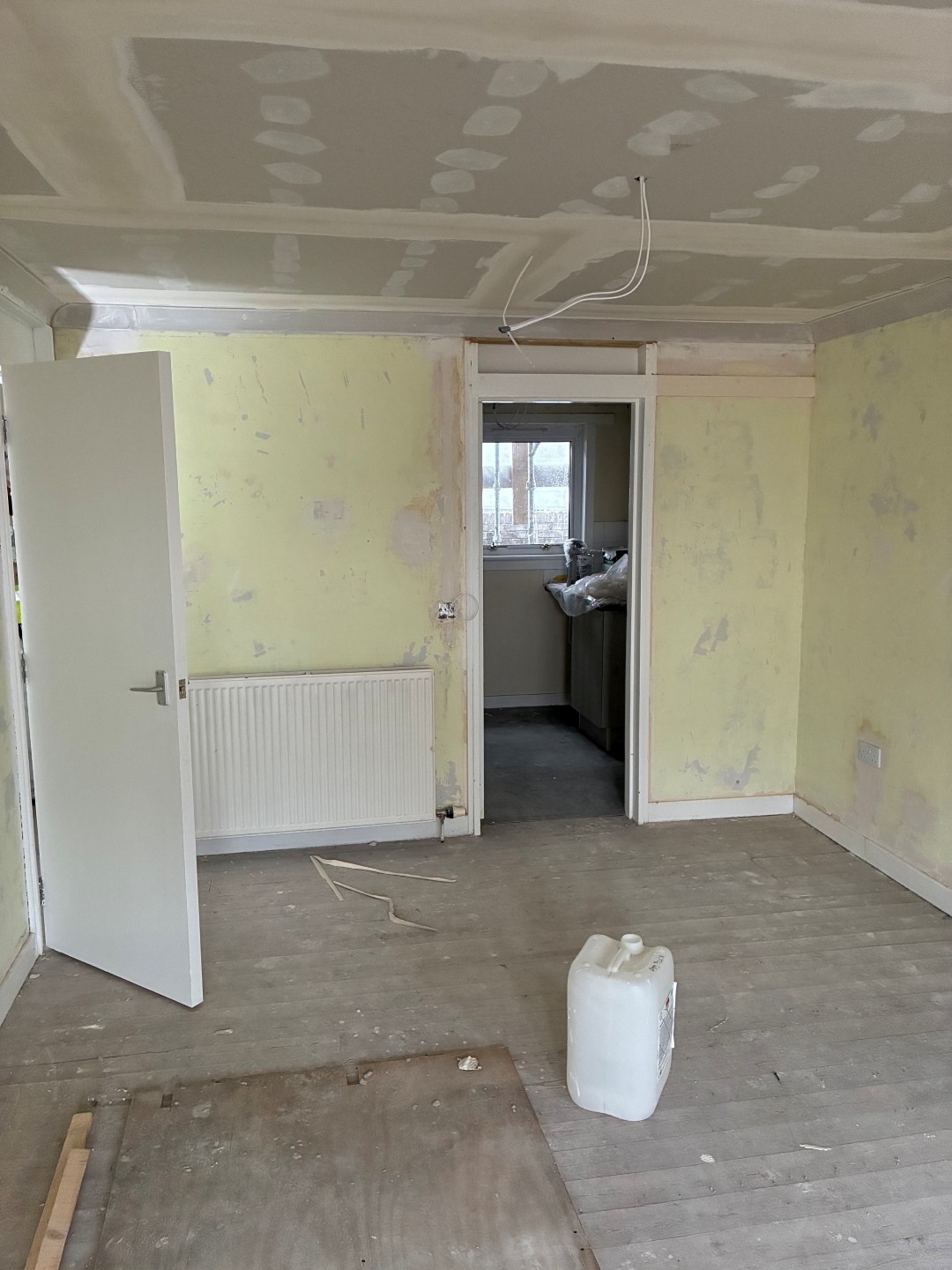
Share Project Update: Progress continues on Facebook Share Project Update: Progress continues on X (formerly Twitter) Share Project Update: Progress continues on Linkedin Email Project Update: Progress continues linkProgress continues on the RAAC pilot project, with the internal plasterboard works now complete.
Electricians are currently refitting the electrics and reinstating lighting throughout the property. Interior painting is also due to begin this week, bringing the internal works another step closer to completion.
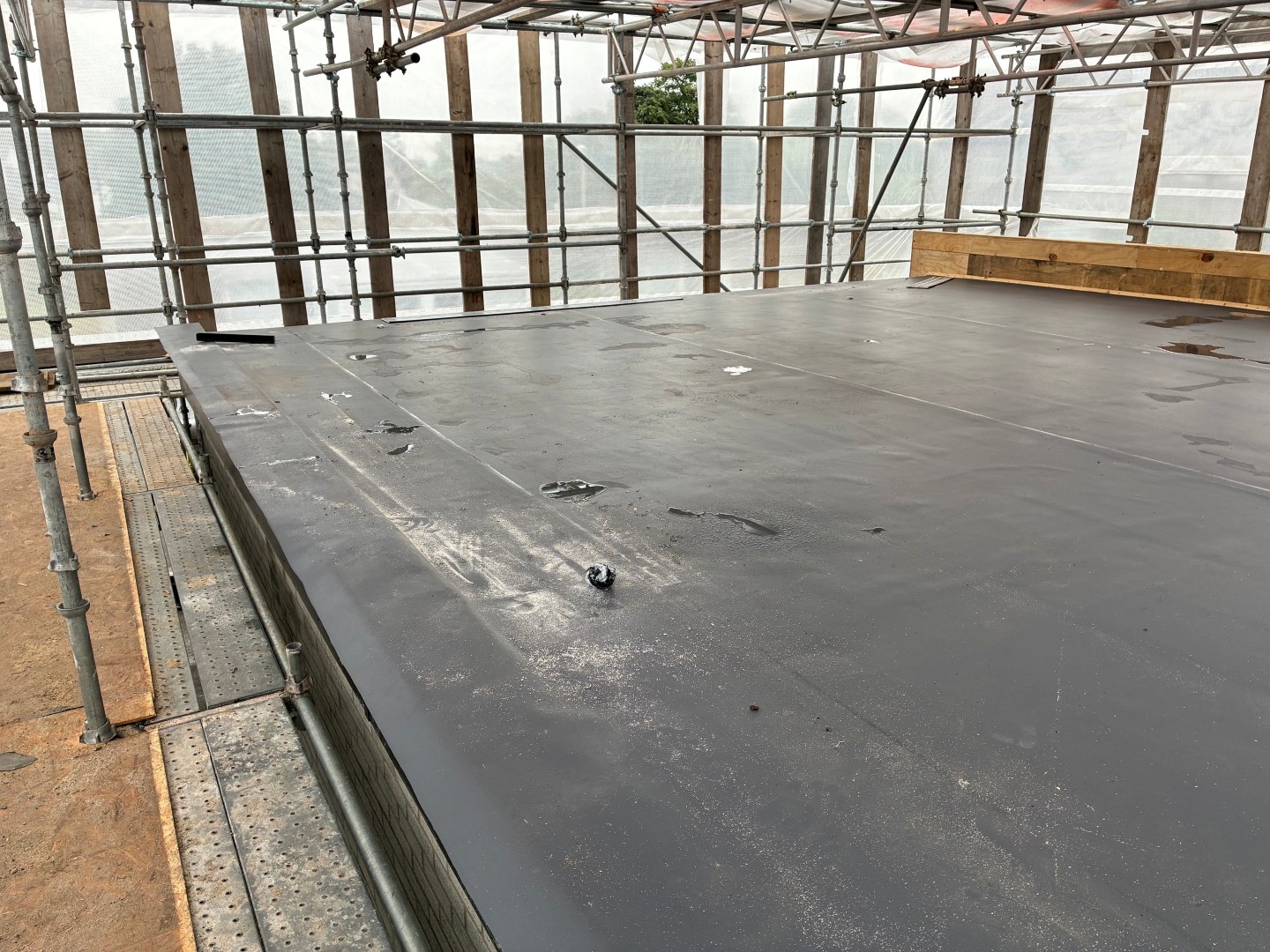
Externally, the installation of the new roof is progressing well. The new roof layers, including membranes, insulation and roof coverings, are being installed to ensure the new timber-structured roof is fully watertight.
Fascias and soffits are also being fitted alongside the new roof coverings. These important roofline components help protect the property and support the guttering.
We would like to take this opportunity, to again, thank residents for their continued patience during the ongoing works.
-
Project Update: New timber joists installed
Share Project Update: New timber joists installed on Facebook Share Project Update: New timber joists installed on X (formerly Twitter) Share Project Update: New timber joists installed on Linkedin Email Project Update: New timber joists installed linkA raised blockwork parapet wall (a low wall constructed from concrete blocks that extends above the roofline) has been built to provide a new connection between the two adjoining roof finishes – the existing RAAC roof and the new timber roof structure.
The timber joists that will support the new flat roof finishes have also been installed, ready for the completion of all roof finishes and the interior property reinstatement works.
We would like to take this opportunity to thank residents for their continued patience during the ongoing works.
-
Project Update: RAAC safely removed
Share Project Update: RAAC safely removed on Facebook Share Project Update: RAAC safely removed on X (formerly Twitter) Share Project Update: RAAC safely removed on Linkedin Email Project Update: RAAC safely removed linkAll RAAC panels have been safely removed by contractors over the weekend (18 & 19 July 2026). A structural engineer met with Angus Council officers on Monday (20 July) to give the go ahead for the next stage of the pilot project.
The next stage includes the installation of a new timber-structured flat roof, which will begin this week. This next step will allow us to complete the new connection between properties with the new timber roof structure and the existing RAAC roof finishes of the neighbouring Angus Council property.
Contractors will be on site between 8:00am and 5:00pm, Monday to Friday, throughout the remaining duration of the works.
We would like to take this opportunity to thank residents for their continued patience during the ongoing works.

